1. Introduction: The Fundamental Tension in Tunisia’s Agricultural Policy
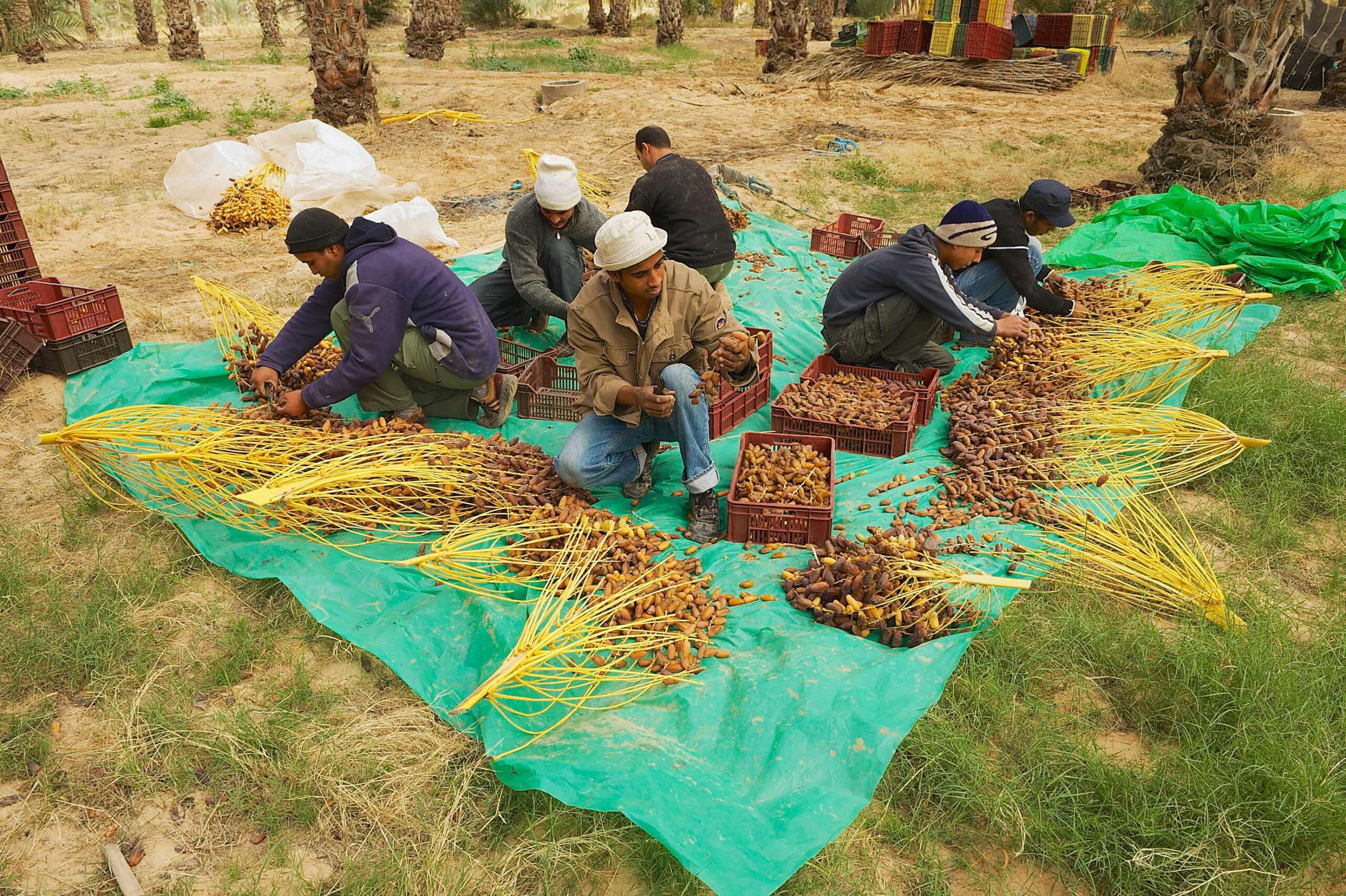
Tunisian policymakers approach agriculture as the main economic tool to improve the country’s trade balance. Optimizing the trade balance as the primary objective has led to a dual strategy for the agricultural sector: to promote exports of products for which Tunisia has a comparative advantage – olive oil, dates, citrus fruits, and fish – while reducing its dependence on imports of staple foods – cereals, milk, and beef – in the interest of safeguarding national food security.
This dual strategy has created tension in the agricultural policy. The free trade liberalization facilitated by the country’s membership in the World Trade Organization (WTO) is counterbalanced by protections for domestic producers, using measures such as tariff and non-tariff barriers, particularly for sensitive foodstuffs (agricultural products that a country considers highly important to its national interests and therefore seeks to protect from full trade liberalization).((For more information see: AgriPolicyKit, “Categorising Products as ‘Sensitive’ or ‘Special’”, 1 July 2024, available at https://agripolicykit.net/en/instruments/categorising-products-as-sensitive-or-special)) The simultaneous goals of prioritizing food security and protecting national farming interests, while also integrating with international markets, prevent trade policies from effectively balancing export promotion and import needs.
The inherent contradiction of these objectives has not only compromised Tunisia’s agricultural policy but also directly contributed to supply chain disruptions and the temporary disappearance of essential food items from the national market. The sustained dependence on imported staples has, in turn, exacerbated the wider economic crisis, contributing directly to a significant rise in Tunisia’s external debt and straining the foreign currency reserves needed for servicing that debt.
As Tunisia is currently engaged in negotiations to update its trade agreement with the EU, there is an urgent need to reevaluate Tunisia’s trade policy framework to prevent the negotiation process from locking the country into unsustainable and irreversible policy choices.
In that spirit, this policy analysis traces the roots of Tunisia’s agricultural trade policies, examining key multilateral obligations and the asymmetric outcomes of its trade agreements with the EU. It outlines how the deep power imbalance between the EU and Tunisia is affecting Tunisia’s agricultural policies and documents the critiques and resistance to deeper trade integration among Tunisian civil society, unions, and farmers. Building on the evidence gathered through analysis and semistructured interviews with stakeholders from civil society organizations, farmer unions, and the EU representative in Tunisia, this report proposes a six-point proactive strategy to redefine the EU-Tunisia trade relationship.
2. The Roots of Trade Liberalization: The Structural Adjustment Program and WTO Integration
The backbone of Tunisia’s current agricultural policies dates back to the 1980s, a period that witnessed a radical change in the country’s public policies, particularly in the agricultural sector. During that decade, the country experienced a severe economic recession characterized by a sharp slowdown in growth, high unemployment rates, and growing external debt. To address this crisis, and under pressure from international financial institutions such as the International Monetary Fund and the World Bank, the Tunisian government finally decided to implement the conditions imposed by the international financial institutions as part of a structural adjustment program. This program, a standardized, market-oriented formula dictated by liberal and neoliberal ideology, specifically targeted the agricultural sector. The main policy changes imposed (and still in force) required the state to withdraw its support by removing subsidies on inputs, deregulating agricultural prices, reducing direct intervention in farms, and ending support programs for small farmers.((Fadil Aliriza, “Périphérie perpétuelle: les IFI et la reproduction de la dépendance économique de la Tunisie” (French), in L’impact et l’influence des institutions financières internationales sur le Moyen-Orient et l’Afrique du Nord, Friedrich Ebert Stiftung, 2020 (Aliriza, “Périphérie perpétuelle”).)) As a result of the agricultural structural adjustment program, the gradual opening up of the agricultural market began and later accelerated with the 1994 Marrakesh Agreement (which established the WTO) and the 1995 Association Agreement (AA) with the EU.
The Marrakesh Agreement fundamentally altered the rules of global trade by integrating agriculture into the liberalization framework. This key shift abolished the historical “agricultural exception” that treated agricultural products as standard commodities subject to competitive market forces. Consequently, WTO members, particularly through the Agreement on Agriculture, committed to improving market access for foreign goods and limiting domestic subsidies.((World Trade Organization, Agreement on Agriculture, 1995, available at https://www.wto.org/english/docs_e/legal_e/ag_e.htm (WTO, Agreement on Agriculture).)) As a developing country and a founding member, Tunisia’s primary commitments under the Agreement on Agriculture involved: reducing domestic support, especially input subsidies; implementing a substantial tariff reduction over ten years; and tariffication, or converting non-tariff barriers into measurable tariffs.((WTO, Agreement on Agriculture.))
Compliance with these obligations directly exposed the Tunisian agricultural system to intense global competition. Before, the agricultural sector had been heavily protected by the government through a wide array of economic instruments, including domestic pricing policies, border protection, subsidies for input use, and financial incentives.((Chokri Thabet, Zouhair Rached, and Ali Chebil, “Improving Agricultural Policies to Enhance Food Security in Tunisia: A Retrospective and Prospective Analysis”, New Medit, Vol. 24, no. 3, 2024, p. 14 (Thabet, Rached, and Chebil, “Improving Agricultural Policies”).)) Tunisia’s high preexisting agricultural tariffs meant that the required WTO reductions resulted in a disproportionate and sudden shock to the domestic market, imposing deep cuts relative to the former effective level of protection.((World Trade Organization, Agreement on Agriculture, 1995.))
The negative results of the structural changes mandated by the WTO have led to criticism that the Agreement on Agriculture effectively formalized protectionist measures for developed countries while limiting the ability of developing nations like Tunisia to protect their agricultural sectors. Critics argue that the idealized concept of market forces, driven purely by price signals, fails to account for the massive production and subsidy disparities between nations.((Mustapha Jouili, “Olive Oil and Water: Moving Towards Sustainable Agricultural Trade between the EU and Tunisia”, in Examining Agricultural Trade between the EU and North Africa in Times of Crisis, Transnational Institute, September 2023, available at https://www.tni.org/en/publication/olive-oil-and-water (Jouili, “Olive Oil and Water”).)) As an example, the EU’s agricultural subsidies, although officially categorized by the WTO as nondistorting or green box policies, nevertheless distort international prices, exacerbating inequalities and marginalizing farmers in the global south. This imbalance places an untenable burden on countries like Tunisia as they attempt to compete while simultaneously meeting their own development and food security goals.((Claire Godfrey, “Stop the Dumping! How EU Agricultural Subsidies Are Damaging Livelihoods in the Developing World”, Oxfam International, 2002.))
In addition, adherence to the global trading system imposes substantial negative consequences related to non-tariff measures, specifically sanitary and phytosanitary (SPS) measures and technical trade barriers. As traditional tariffs globally decline, non-tariff measures – which include requirements for testing, inspection, packaging, and labeling – have become the most significant obstacles to agricultural exports.((Bernhard Tröster et al., “Non-tariff Measures and Regulatory Alignment in a North-South Context: Assessing Compliance Costs for Tunisian Agriculture under the EU-Tunisia Free Trade Agreement (ALECA),” Journal of Globalization and Development, Vol. 14, no. 1, 2023, pp. 51-85, (Tröster et al., “Non-tariff Measures”).)) In fact, while trade liberalization theoretically benefits Tunisia’s competitive export sectors of olive oil, dates, and citrus, compliance with SPS and non-tariff measures is technically complex and financially demanding. Available evidence suggests these prohibitive compliance costs place a severe strain on Tunisian farmers and exporters, stifling market access even where a strong comparative advantage exists.((Tröster et al., “Non-tariff Measures”.)) A failure to meet stringent sanitary and quality standards – standards often heavily influenced by the EU – would close the EU market to Tunisian exporters. This regulatory harmonization effectively constitutes a process of unilateral liberalization benefiting the EU. Tunisian producers are compelled to adopt higher EU regulatory standards – incurring significant adjustment costs for production processes and facilities – as a prerequisite for improved access to the EU market. Conversely, EU exporters gain enhanced access to the Tunisian market without any adjustment costs. This shift also creates new barriers for non-EU exporters seeking to enter Tunisia. Any net positive outcome for Tunisia thus hinges on whether its exporters can achieve productivity gains sufficient to offset these new compliance expenses.((Tröster et al., “Non-tariff Measures”.)) However, the disparities in the EU-Tunisia trade relationship have precluded such an outcome.
3. The EU’s Dominant Role in Tunisia’s Economy
The EU and Tunisia maintain close and long-standing trade relations marked by a deep power imbalance. The EU is Tunisia’s main trading partner, accounting for 55% of Tunisia’s overall trade in 2024, when 7.2% of Tunisia’s exports went to the EU, and 45.2% of Tunisia’s imports came from the EU. However, asymmetrically, Tunisia ranks 35th among the EU’s trading partners, representing only 0.5% of the EU’s total trade in 2024. Furthermore, European companies are the leading foreign investors in Tunisia, responsible for 88% (€5.8 billion) of the total foreign direct investment and 90% of jobs related to such investment at the end of 2023.((European Commission, “EU Trade Relations with Tunisia – Facts, Figures and Latest Developments”, available at https://policy.trade.ec.europa.eu/eu-trade-relationships-country-and-region/countries-and-regions/tunisia_en (European Commission, “EU Trade Relations with Tunisia”)) )
The clear imbalance in the EU-Tunisia trade relationship in favor of the EU is exacerbated by differences in the territorial size of the two entities, as well as the historical colonial and postcolonial relations of dominance. In fact, Tunisia has always been considered a satellite of the EU, a peripheral country in the international division of labor with very limited bargaining power.((Kristina Kausch, “The End of the (Southern) Neighbourhood”, EuroMeSCo Paper, no. 18, European Institute of the Mediterranean, 2013 (Kausch, “The End of the Neighbourhood”).))
The relationship is also one of dependency, given that the EU is one of Tunisia’s main donors. During the 2017-2020 period alone, Tunisia received €900 million in financial assistance under the European Neighbourhood Instrument, and support has and will continue under the Neighbourhood, Development and International Cooperation Instrument for the period 2021-2027.((Kausch, “The End of the Neighbourhood”.)) Moreover, an entire framework of agreements exists that keeps Tunisia “close” to the EU. Tunisia belongs to the EU’s Southern Neighbourhood and participates in regional agreements such as the 2001 Agadir Agreement and the Regional Convention on Pan-Euro-Mediterranean Preferential Rules of Origin (known as the PEM Convention) since 2015. However, there is one indication of a temporary distancing from this close relationship: the current suspension of negotiations for a Deep and Comprehensive Free Trade Area (DCFTA), which began in 2015.((European Commission, “EU Trade Relations with Tunisia”.))
3.1. The 1995 Association Agreement: Asymmetric Agricultural Liberalization
The EU-Tunisia trade relationship is structured under the AA, which was signed in July 1995 and entered into force in March 1998. Aimed at creating a free trade area for industrial products – which were the plan’s priority – the AA implemented a gradual elimination of customs barriers and other obstacles to trade to take place over a transition period of 12 years. The AA also covered agricultural products, providing for the gradual opening of markets for certain agricultural, agrifood, and fishery products – but the liberalization of the agricultural sector was more limited and subtle. While EU customs duties on Tunisian industrial products fell almost to zero, they remained at 11.8% on average on Tunisian agricultural imports into the EU market.((Bettina Rudloff, “A Stable Countryside for a Stable Country? The Effects of a DCFTA with the EU on Tunisian Agriculture”, SWP Research Paper, no. 2, German Institute for International and Security Affairs, 2020, available at https://www.swp-berlin.org/10.18449/2020RP02/(Rudloff, “Stable Countryside for a Stable Country”)) )
The AA set up agricultural protocols for handling supposed mutual concessions, which for Tunisian exports vary based on the nature of the product and the sensitivity of EU markets. The concessions for Tunisia include: complete exemption from tariffs without quantity or time restrictions; complete exemption from duties with seasonal restrictions; no duty quotas; and partial tariff reductions. Tunisia grants the EU preferential access for priority products such as cereals, meat, and dairy products. Analysis of the agreement’s agricultural provisions reveals a disparity in market access. While Tunisia gained relatively open access for noncompetitive products like dates and prickly pears, stricter regulations were maintained for products that could compete with EU agriculture. Tariff quotas and non-tariff barriers, such as stringent entry requirements, monthly quotas, technical standards, and restrictive time frames, effectively limited Tunisian exports of sensitive agricultural goods.((Tunisian Union of and Fishing Representative, Interview by Author, 6 October 2025 (UTAP Representative, Interview).))
One of the fundamental means through which the EU controls market access for Tunisian agriproducts is the tariff quota: imports of specific products from Tunisia to the EU are allowed free of taxation when passing through customs unless their volume exceeds a specific quota, in which case they are subject to customs duties. Tariff quotas are especially applied to products in direct competition between Tunisian and European producers, such as olive oil, dried tomatoes, fruits, and vegetables. The EU has also established the “entry price system”, which allows it to dynamically adjust tariff levels so that the price for important Tunisian export products, such as fruits and vegetables, does not fall below a predetermined minimum price, thus disadvantaging Tunisian producers by making their exports less competitive on the EU market.((UTAP Representative, Interview.))
The asymmetry of agricultural liberalization under the AA suggests a protectionist approach by the EU toward products that could challenge its domestic agricultural market.((Jouili, “Olive Oil and Water”.)) The EU prioritized its domestic agricultural interests, while continually asking Tunisia to open its market to the global market and withdraw subsidies.((Abdelali Jbili and Klaus-Stefan Enders, “The Association Agreement Between Tunisia and the European Union”, Finance & Development, International Monetary Fund, 1996.))
The EU-Tunisia AA was signed with divergent, sometimes overlapping goals. While officially framed as a collaborative effort promoting peace and prosperity, the AA initiative can be interpreted as a strategy by the EU to secure the Mediterranean region as a key market and investment area.((Aliriza, “Périphérie perpétuelle”.)) The EU was looking to reinforce its own presence in a neighboring region with an emphasis on market and security.
For Tunisia, during its phase of economic opening, the AA was a means toward economic strengthening and political legitimacy in the international market. However, the outcome of the agreement did not meet national economic expectations. While some macroeconomic indicators improved, Tunisia could not achieve meaningful long-term investment and growth objectives; the agricultural trade integration did not offer a better trade balance or foreign currency reserves, and proved the mismatch between anticipated and actual gains.((Abdeljelil Bedoui, “De l’échec du modèle économique et social en Tunisie et de la nécessité d’un modèle alternatif” (French), in Development by Free Trade? The Impact of the European Union’s Neoliberal Agenda on the North African Countries, P.I.E. Peter Lang, 2017, pp. 249-259 (Bedoui, “De l’échec du modèle économique”).)) Moreover, the AA further committed Tunisia to its conventional trade products, without encouraging economic diversification or trying to address issues like unemployment and regional imbalance.((Bedoui, “De l’échec du modèle économique”.)) Due to its use of quotas and protectionist mechanisms, the outcome of the European AA solidified Tunisia’s role as a peripheral market, preventing its integration into European markets.
Recognizing the limitations and the lack of a comprehensive approach in the 1995 framework, the EU subsequently sought to establish a “new generation” pact to push for deeper integration.((EU Representative, Interview by Author, 25 September 2025 (EU Representative, Interview).))
3.2. The Suspended DCFTA: High Risks and Public Opposition
In 2015, the EU initiated negotiations with Tunisia on the DCFTA. The EU’s DCFTAs were a new generation of trade agreements that were first initiated with Morocco and Tunisia; they go beyond the standard trade liberalization of the AA or WTO Free Trade Agreements, extending far beyond tariffs to areas like regulatory alignment and investor protection to stimulate foreign direct investment. The proposed Tunisia-EU DCFTA contained specific provisions on agricultural and fisheries trade, SPS standards, intellectual property rights, and investor-state dispute settlement provisions.
The DCFTA presented a complex challenge for Tunisia’s agricultural system. First, the agreement’s requirement for regulatory alignment with EU standards would impose significant compliance costs on Tunisian producers, potentially leading to a substantial decrease in agricultural added value and negative impacts on employment and consumption. Crucially, the EU’s internal support mechanisms grant it a dual advantage: enabling exports at prices below production cost and protecting EU producers, rendering Tunisia’s current tariff rates significantly higher than those of the EU. Tunisia would thus bear a greater burden in tariff dismantling, regardless of the transition period. In fact, impact assessments have concluded that the DCFTA has significant risks, as the value added in Tunisian agriculture might decline by 8.3%.((Tröster et al., “Non-tariff Measures”.)) Although the proposed tariff reductions might boost exports, they are unlikely to counteract these costs, and further lowering Tunisian tariffs could exacerbate the negative effects.((Tröster et al., “Non-tariff Measures”.)) Moreover, there are concerns that the DCFTA will create overreliance on the EU market.
Second, the significant disparities between Tunisian and European farmers have raised concerns. These disparities are the consequence of the different protectionist measures used by each party. While Tunisia relies heavily on high customs duties, the EU uses a combination of internal support, import price controls, and SPS standards. The EU’s agricultural subsidies in the form of direct payments to European farmers in some cases even exceed the protection offered by Tunisian tariffs – creating a dumping effect of EU agricultural exports on the Tunisian market, especially of cereals and animal products.((Observatoire Tunisien de l’Economie, ALECA et agriculture: Au-delà des barrières tarifaires (French), Union Tunisienne de l’Agriculture et de la Pêche and Fondation Rosa Luxemburg Bureau Afrique du Nord, 25 April 2019, available at https://rosaluxna.org/fr/publications/aleca-et-agriculture-au-dela-des-barrieres-tarifaires/ (Observatoire Tunisien de l’Economie, ALECA et agriculture).))
Third, concerns were raised about the potential DCFTA impact on labor rights, namely the exploitation of low-paid Tunisian workers and the viability of Tunisian small- and medium-sized enterprises faced rising competition from the EU.((Layla Riahi and Hamza Hamouchene, *Deep and Comprehensive Dependency: How a Trade Agreement with the EU Could Devastate the Tunisian Economy,*Transnational Institute, 8 December 2020, available at https://www.tni.org/en/publication/deep-and-comprehensive-dependency)) Finally, the negotiation process itself has been under scrutiny due to its lack of transparency and consultation with interested stakeholders who would be affected by the pact, including small- and medium-sized enterprises, producers, consumers, and the beneficiaries of public services.
Due to pressure from Tunisian trade unions, political parties, and civil society, negotiations on the DCFTA are currently suspended. The Tunisian General Labor Union expressed its view that the DCFTA posed a risk to the agricultural sector. The Tunisian Union of Agriculture and Fishing outright rejected the agreement, fearing that an influx of EU imports could displace the existing small-scale agricultural structures, drawing upon what unionists perceived as negative outcomes from the earlier AA.((Rudloff, “Stable Countryside for a Stable Country”.)) This widespread opposition stems from a deep-seated wariness of potential economic and political dominance by the EU as well as past negative experiences with agricultural sector transformations, particularly in relation to land ownership.((Rudloff, “Stable Countryside for a Stable Country”.)) A survey conducted by the Tunisian Forum for Economic and Social Rights, a civil society organization, also concluded that the DCFTA process could prove “fatal for farmers” and lead to a “loss of food sovereignty” or an “invasion of European products”.((Rudloff, “Stable Countryside for a Stable Country”.))
While the Tunisian government’s stance remains unclear, some observers suggest that the “comprehensive partnership package” outlined in the June 2023 joint statement between the Tunisian president and the EU delegation may represent a rebranded version of the DCFTA.((Jouili, “Olive Oil and Water”.))
4. Trade Agreements and the Tunisian Farmer: Profiting the Few, Excluding the Small-scale
To understand how the EU-Tunisia trade relationship affects Tunisian farmers, it is helpful to focus on the trade of olive oil, as this sector offers a clear example of the complex trade dynamics and policy outcomes discussed so far. Olive oil – a product for which Tunisia has a natural comparative advantage – benefited from preferential access and quota mechanisms written into the trade agreements, which effectively prompted Tunisian producers and policymakers to allocate their resources heavily toward olive oil production.((Bettina Rudloff, Liberalizing Agricultural Trade between the EU and Tunisia, Policy Brief, Deutsche Gesellschaft für Internationale Zusammenarbeit (GIZ), 2019 (Rudloff, Liberalizing Agricultural Trade).)) As a result, the olive oil sector dominates the country’s trade profile: Tunisian exports are now structurally dependent on agriculture, with olive oil accounting for 40% of total agricultural exports.
Yet even for this most competitive product, Tunisia is denied free access to the European market. Tunisia benefits from a standing duty-free tariff quota of 56,700 tons of untreated olive oil per year to the EU. Although this quota has occasionally been temporarily increased – as occurred in 2016 and 2017 following the Sousse terror attacks to mitigate economic losses from the collapse of tourism – it remains difficult to change.((Rudloff, Liberalizing Agricultural Trade.)) The EU’s olive oil import policy is governed by regulations that aim explicitly to protect EU producers and strengthen European exporters’ competitiveness. Consequently, the volume of Tunisian olive oil allowed into the EU is not driven by Tunisia’s export capacity, but by internal conditions and volatility of the European olive oil market. This arrangement establishes Tunisian imports as a stabilizing buffer, functioning as a compensatory mechanism to bridge European supply deficits instead of providing consistent, strategic market penetration.((Chafik Ben Rouine, Jihen Chandoul, Jalila Bouhlila-Boudali, and Racem Ben Hmida, Evaluation de l’impact des politiques tunisiennes et européennes sur les exportations de l’huile d’olive tunisienne (French), Observatoire Tunisien de l’Economie, 2018, (Ben Rouin et al., Evaluation de l’impact).))
In addition, the majority of Tunisian olive oil exported under the duty-free quota is delivered in bulk containers rather than in salable, bottled form.((Rudloff, Liberalizing Agricultural Trade.)) This limitation is not incidental: by providing access only to the bulk commodity market, the trade dynamic enables European entities to capture the high value-added margin associated with processing, bottling, and branding. This asymmetric policy acts as a continuous mechanism for wealth transfer, limiting domestic value creation despite preferential access.((Ben Rouine et al., Evaluation de l’impact.))
Moreover, this structural limitation – the focus on bulk trade and the accompanying political economy – ensures that only large actors realize the benefits of the agreements. While free trade agreements are presented as opportunities for all Tunisian farmers to expand into the EU market, their implementation has fostered selective access by a few larger, more established agricultural enterprises that possess the required capital and sophisticated infrastructure. Conversely, for the vast majority of small-scale farmers who are structurally unable to capitalize on these opportunities, the EU market access remains virtually impossible. Compliance with complex and costly EU standards is particularly challenging for small farmers because they lack the technical expertise, essential infrastructure (such as modern processing and storage facilities), and significant financial resources needed to meet the EU’s demanding requirements.((Rudloff, Liberalizing Agricultural Trade; Rudloff, “Stable Countryside for a Stable Country?”)) Furthermore, even as small-scale farmers lack access to lucrative export markets, they suffer from increased import competition in Tunisian domestic markets.
Although some members of farmer unions and private organizations believe there are potential economic benefits to the AA, unions, consumers, and food sovereignty activists have also expressed concerns about the negative social and environmental impacts of the AA and the FTAs, particularly for vulnerable groups. For advocates of food sovereignty, the worry is that if Tunisian agricultural production is oriented toward export markets, it is geared to meeting European rather than local food needs, inevitably increasing the country’s dependence on imported food products, particularly essentials like cereals. They also believe that the benefits of FTAs, while remaining uncertain, can also turn into problems if they divert resources such as land and water. Moreover, export-oriented agricultural practices can contribute to the gradual erosion of traditional small-scale farming, and with it the valuable know-how of local farmers, which can be more sustainable and better adapted to local ecological conditions.((مجموعة العمل من أجل السيادة الغذائية,[Working Group for Food Sovereignty] غذاؤنا، فلاحتنا، سيادتنا [Our Food, Our Agriculture, Our Sovereignty] Friedrich Ebert Stiftung, 2019.))
Despite persistent advocacy from Tunisian trade unions and stated attempts by Tunisian authorities to improve negotiating conditions, a fundamental policy gap remains: neither Tunisia nor the EU has established concrete mechanisms to effectively counteract the inherent market asymmetries and improve small farmers’ access to the European market.((UTAP Representative, Interview; EU Representative, Interview.)) Lacking effective organizational representation and inclusion in decision-making processes, small-scale farmers are particularly vulnerable to the impacts of free trade agreements. In addition, the relation between small-scale farmers and local and regional offices of the Ministry of Agriculture has deteriorated. After the government eliminated programs that provided them with advice and technical assistance, farmers now perceive government offices as ineffective. Meanwhile, the private services that replaced them are simply too expensive for small-scale farmers.((Thabet, Rached, and Chebil, “Improving Agricultural Policies”.))
These dynamics highlight the urgent need for a more inclusive policy process and approach to any future trade negotiations between Tunisia and the EU. However, it is also crucial to remain realistic about the impact of public participation and a more inclusive approach to trade negotiations. Indeed, while advocating for public participation is common practice, there is insufficient evidence that participation, even when granted, meaningfully influences final policymaking, especially regarding trade policy.((Houssem Braiki et al., “Large-scale Participation in Policy Design: Citizen Proposals for Rural Development in Tunisia”, EURO Journal on Decision Processes, 2022, available at https://doi.org/10.1016/j.ejdp.2022.100020)) In reality, Tunisia’s agricultural system exhibits a profound lack of policy sovereignty, often functioning as a governance proxy for external financial and technical donors, particularly within the framework of policy assistance projects. In fact, major international institutions like the World Bank and the EU provide vital financial support, while technical assistance institutions like the German Agency for International Cooperation and the French Development Agency offer support and policy guidance. These concerted interventions – through funding, technical assistance, and policy advice – do not merely support; they fundamentally shape and influence the entire agricultural sector.((See e.g.: Observatoire Tunisien de l’Economie, ALECA et agriculture; Ben Rouine et al., Evaluation de l’impact; Chafik Ben Rouine, “Exportation de l’huile d’olive Tunisienne : Les dessous du soutien de l’UE” (French), Observatoire Tunisien de l’Économie, 21 April 2017, available at https://www.economie-tunisie.org/fr/observatoire/infoeconomics/exportation-de-l%E2%80%99huile-d%E2%80%99olive-tunisienne-les-dessous-du-soutien-de-l%E2%80%99ue)) In this externalized model, where policy direction is dictated by financial and technical conditionalities, a core democratic deficit emerges: reforms accompanying this assistance are consistently implemented without any meaningful consultation with or involvement by the small farmers whose livelihoods are directly affected, rendering national policy formulation subservient to donor priorities.
This situation raises fundamental questions about the social sustainability of further trade liberalization in the agricultural sector and highlights the urgent need to implement different policies that can actively protect the livelihoods of peasant communities.
5. Policy Recommendations for Fairer EU-Tunisia Trade Relations
As this analysis has demonstrated, trade relations between Tunisia and the EU are characterized by a deep power imbalance. During periods of crisis, temporary changes have been introduced, namely increases in quotas for Tunisian exports to Europe. This reactive approach, however, does not provide the long-term, structural support needed for economic stability.((UTAP Representative, Interview.))
A proactive strategy is required to redefine the EU-Tunisia trade relationship, shifting from simply requesting volume increases to demanding value-driven market access.((EU Representative, Interview; UTAP Representative, Interview.)) Advocating for such a shift is particularly critical as discussions for updating the 1995 AA are ongoing. The following recommendations outline the details of a proactive strategy.
- Negotiating Specialized, High-Value Quotas
Instead of negotiating solely on the overall volume of bulk conventional olive oil exports, Tunisia must negotiate substantial and permanent duty-free tariff-rate quotas specifically dedicated to processed and high-value niche products.((UTAP Representative, Interview.)) The primary limitation in the olive oil sector is not just the quota size, but the lack of domestic processing and branding capability. By securing quotas specifically for bottled conventional olive oil and for organically produced olive oil, Tunisia would capture the higher margin associated with branding, packaging, and marketing.((Ines Zaghdoudi, “Politique d’exportation d’huile d’olive tunisienne : les intérêts de la Tunisie noyés” (French), Econews, Observatoire Tunisien de l’Economie, 2023.)) This strategy shifts value creation, employment, and capital accumulation domestically and aligns trade policy with structural transformation.
- Prioritizing Water-Efficient Products in EU Trade Negotiations
Tunisia must fundamentally reorient its trade negotiation strategy with the EU to integrate water security as an absolute priority, recognizing water as a nonrenewable strategic resource. Despite European incentives, and given the limited water resources and significant ecological constraints, the potential for increasing agricultural exports in the vegetable oil and fruit and vegetable sectors is very limited.((EU Representative, Interview; UTAP Representative, Interview; Werner Raza et al., Évaluation des effets économiques et sociaux de l’ALECA et du rapprochement règlementaire sur le secteur agricole Tunisien, Fondation Rosa Luxemburg Bureau Afrique du Nord, 2022.)) Tunisian authorities must negotiate a tariff and quota structure that explicitly favors low water-consuming products such as dates, certain aromatic plants, or rainfed olive production over crops known to be notoriously water-intensive, like certain irrigated citrus or fresh fruits. The objective is to link preferential EU market access to water efficiency.
By placing water scarcity at the core of its commercial policy, Tunisia will ensure its agricultural sector contributes to economic growth without compromising national water security and future food sovereignty.
- Codification of Geographical Indications (GIs)
Tunisia has delayed capitalizing on a critical non-tariff mechanism for securing premium market access: GIs. Despite the EU repeatedly suggesting that Tunisia submit proposals on its own GIs since 2016, Tunis has not responded.((Rudloff, “Stable Countryside for a Stable Country?”)) Tunisia must urgently compile and propose a comprehensive list of its GIs for products like regional dates, olive varietals, and other specialty goods. GIs secure the marketing of particular products, boost value creation, and link specialized production to rural development and tourism. These protections must be codified within the existing AA or its updated framework.
- Prioritizing Regulatory Cooperation: Selective Regulatory Alignment Based on Export Potential
An extensive liberalization of agricultural trade will have significant consequences for the structure of production and for the policy objectives of food security. Structural changes in agriculture triggered by regulatory adjustments, tariff liberalization, and potential productivity increases entail an increased risk in the agricultural sector but also in other sectors of the Tunisian economy. Given the fragility of the social and political situation in Tunisia, it therefore seems appropriate to take a cautious and prudent approach to the liberalization of Tunisian agriculture. Before implementing any adjustments, the government must fully assess their impact on domestic employment, ensuring national standards remain appropriate for local needs and evaluating the potential impact of strict EU alignment on export opportunities to non-EU countries.
Hence, Tunisia should leverage negotiations to prioritize enhanced cooperation on SPS measures and technical barriers to trade by focusing on regulatory assistance and convergence. This ensures that Tunisian producers can meet the stringent EU quality standards that often act as non-tariff barriers without an immediate, full market liberalization that would overwhelm local agricultural sectors.((UTAP Representative, Interview.)) Regulatory changes aligned with European standards should be strictly limited to products with clear EU export potential, such as olive oil, specific fisheries, and select fruit and vegetable sectors. For these competitive products, alignment serves a clear economic purpose: securing market access.((Observatoire Tunisien de l’Economie, ALECA et agriculture.))
Without this due diligence, such a mandate would involve prohibitively high compliance costs and force structural changes on local farmers, carrying high social costs.((Tröster et al., “Non-tariff Measures”.))
- Mitigating Common Agricultural Policy Subsidy Impacts
The EU must acknowledge that its Common Agricultural Policy subsidies grant European producers an inherent competitive advantage that threatens Tunisian food security and farmer livelihoods. Future negotiations must therefore include specific provisions or compensatory mechanisms designed to neutralize the distortionary effect of these subsidies on sensitive Tunisian agricultural sectors. This would protect local small-scale farmers and bolster their resilience to overwhelming market shocks.
- Ensuring Inclusive Governance and Supporting Small Farmers
Fair trade cannot be achieved if the benefits are restricted to large, established firms. Policies must actively support small-scale farmers who face the highest exclusion costs. Existing EU financial and technical assistance can be targeted specifically for small-scale farmers and cooperatives to help them meet the EU’s stringent SPS and certification standards. This assistance should cover infrastructure gaps such as storage and processing.((Forum Tunisien pour les Droits Économiques et Sociaux et al., *ALECA UE-Tunisie,*FTDES, May 2018, available at https://ftdes.net/fr/note-politique-aleca-tunisie/))
Trade agreements will gain legitimacy among all actors of the Tunisian agricultural sector only if the negotiating process genuinely involves small-scale farmers, civil society organizations, and local unions, rather than relying solely on large business lobbies. This genuine involvement can be achieved through many mechanisms, including establishing a mandatory consultative forum as a formal, permanent committee that provides structured input throughout the negotiation process or via direct representation, with observer status for accredited representatives of farmers, unions, and civil society, allowing them to follow and influence discussions during the negotiating rounds. Moreover, the negotiating process must be fully transparent, including the publishing of negotiation reports, mandates, and texts.