Background Information
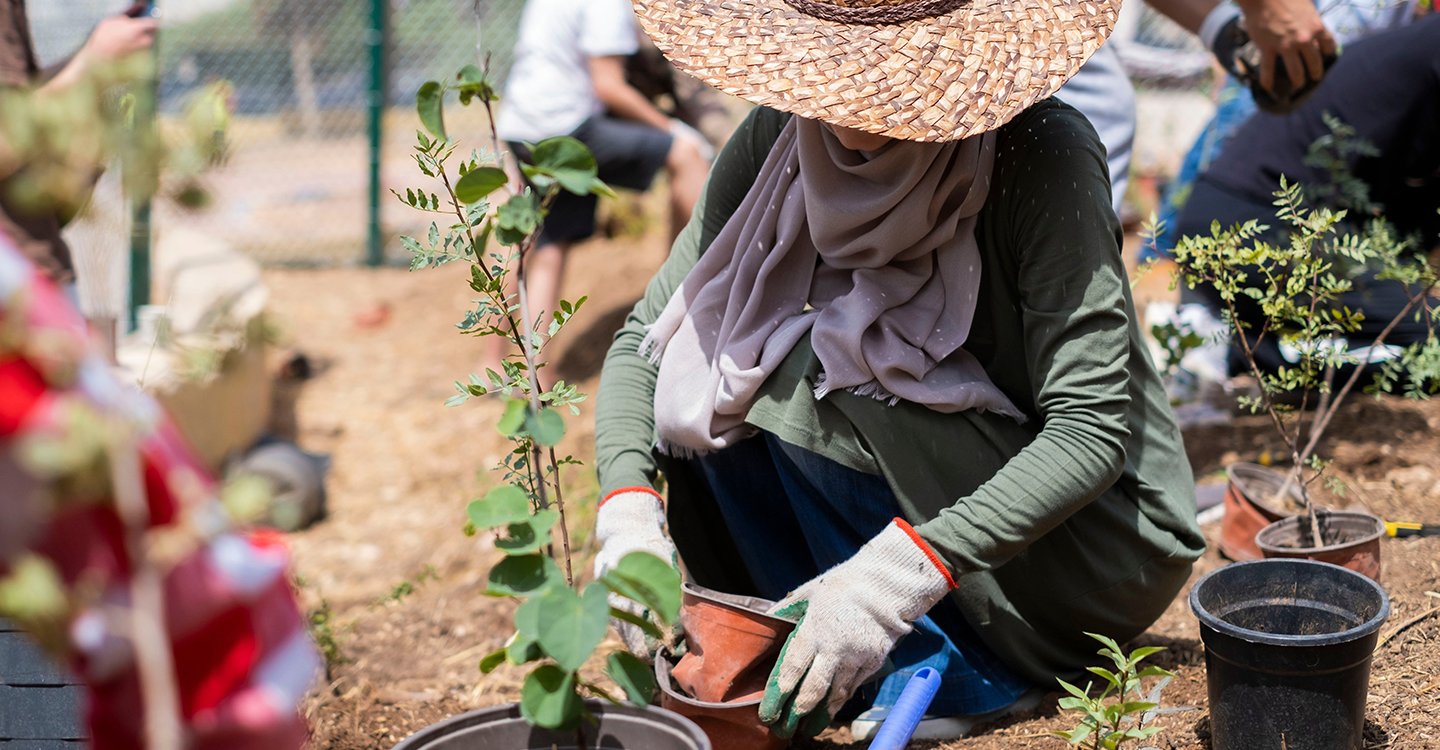
Jordan’s vulnerability to climate change and its reliance on external resources make it a key case study for understanding how inclusive approaches can drive meaningful climate action. This report explores Jordan’s evolving climate action landscape, focusing on grassroots mobilization and institutional engagement. It takes an inclusive approach and is rooted in research-based evidence that a participatory, rights-based approach can produce more effective, accountable, and legitimate outcomes. The insights derived from this report provide diverse recommendations for responding to barriers and opportunities for inclusive climate action.
Introduction
Jordan’s Climate Change Risk
Jordan is one of the most water-scarce countries globally and faces severe climate vulnerabilities, including rising temperatures, erratic precipitation, and more frequent droughts. Researchers emphasize that “Jordan is exceptionally vulnerable to climate change and has limited adaptive capacities.”((Marianna Poberezhskaya and Ibrahim El-Anis, “Constructing Climate Change Rentierism in Jordan”, Environmental Politics, 2024, pp. 1–20 (p. 1).)) The Intergovernmental Panel on Climate Change (IPCC) has identified the Middle East and North Africa (MENA) region as a hotspot for climate change impacts, with Jordan ranking as one of the most vulnerable countries due to its arid climate and reliance on shared transboundary water resources.((IPCC, Climate Change 2022: Impacts, Adaptation, and Vulnerability. Contribution of Working Group II to the Sixth Assessment Report of the Intergovernmental Panel on Climate Change, 2022.)) These factors make Jordan particularly susceptible to desertification, reduced agricultural productivity, and water scarcity. For Jordan, climate action must be tailored to its unique challenges: heavy reliance on foreign aid, limited water resources, reliance on imports for energy, and socioeconomic pressures from hosting large refugee populations.
There is little academic literature published on the topic of climate action in Jordan, and the few publications that exist focus on the macro-level challenges to policy-making and implementation processes. These note “the prioritization of short-term political and economic interests, over-reliance on external actors, limited financial, technical and knowledge capacities, and a lack of coordination between the key public sector stakeholders.”((Ibrahim El-Anis and Marianna Poberezhskaya, “Responding to Climate Change in Jordan: Understanding Institutional Developments, Political Restrictions and Economic Opportunities”, British Journal of Middle Eastern Studies, 2023, pp. 1–19 (p. 1).)) There are publications on the impacts of climate change on specific sectors such as agriculture, energy, and water resources, with severe exacerbating environmental challenges management, with studies emphasizing ((Nadhir Al-Ansari, Noor Alibrahiem, Mohammed Alsaman and Sven Knutsson, “Water Demand Management in Jordan”, Engineering, vol. 6, no. 1 (2014), pp. 19–26; Hiba Hussein, “Lifting the Veil: Unpacking the Discourse of Water Scarcity in Jordan”, Environmental Science & Policy, vol. 89 (2018), pp. 385–392.)) and Hussein (2018) propose integrated water management strategies for tackling water scarcity. In the realm of renewable energy – where Jordan has made significant progress, particularly in solar and wind energy, to reduce greenhouse gas emissions – Salah et al.((Ahmad A. Salah, Mohamed M. Shalby and Furat Basim Ismail, “The Status and Potential of Renewable Energy Development in Jordan: Exploring Challenges and Opportunities”, Sustainability: Science, Practice and Policy, vol. 19, no. 1 (2023), 2212517.)) highlight the potential of renewable energy in Jordan. Jordan’s climate adaptation efforts are also well-documented, particularly in agriculture and urban planning. Al-Bakri et al. discuss the impacts of climate change on agriculture and propose adaptive measures to safeguard food security.((Jawad Al-Bakri, Ayman Suleiman, Fayez Abdulla and Jawad Ayad, “Potential Impact of Climate Change on Rainfed Agriculture of a Semi-Arid Basin in Jordan”, Physics and Chemistry of the Earth, Parts A/B/C, vol. 36, nos. 5–6 (2011), pp. 125–134.)) In one of the few publications on climate action from below, El-Anis and Poberezhskaya observe that “when it comes to climate change ‘social mobilization is at its nascent stages’ in the region with Jordan showing one of the lowest levels of climate activism (e.g. no NGO specifically and consistently focuses on climate change)”.((El-Anis and Poberezhskaya, “Responding to Climate Change in Jordan”, p. 11.))
The dearth of research on climate action from below underscores the urgent need to integrate local knowledge and grassroots perspectives, ensuring that climate policies and actions reflect Jordan’s unique sociopolitical and environmental context.
Guiding Framework: Integrating Social Movement and Governance Theory
This report applies a conceptual framework that combines social movement and governance theories to analyze the data from semi-structured interviews.
- Social movement theory explains how groups mobilize, develop collective identities, and influence policy through activism. The key concepts this study uses from this theory are “resource mobilization”((J. Craig Jenkins, “Resource Mobilization Theory and the Study of Social Movements”, Annual Review of Sociology, vol. 9, no. 1 (1983), pp. 527–553.)) to measure CSOs’ funding sources, “framing of climate justice”((Donatella della Porta and Lisa Parks, “Framing Processes in the Climate Movement: From Climate Change to Climate Justice”, in Routledge Handbook of the Climate Change Movement, eds. Donatella della Porta and Mario Diani, Routledge, 2014, pp. 19–30.)) to analyze the narratives CSOs use to frame climate justice and the specific language they adopt, and “coalition-building and networking”((Andrea Pritoni, “Navigating Between ‘Friends’ and ‘Foes’: The Coalition Building and Networking of Italian Interest Groups”, Italian Political Science Review/Rivista Italiana di Scienza Politica, vol. 49, no. 1 (2019), pp. 49–68.)) to examine how CSOs form alliances domestically and internationally to increase their advocacy influence.
- Governance theory examines the interaction between government bodies, CSOs, and international actors, focusing on power dynamics, policy influence, and institutional constraints. The key concepts this study uses from this theory are “network governance”((Naim Kapucu and Qian Hu, Network Governance: Concepts, Theories, and Applications, Routledge, 2020.)) to map the interactions among government and non-government actors in policy-making, and “institutional barriers”((Brian J. Walker, W. Neil Adger and Duncan Russel, “Institutional Barriers to Climate Change Adaptation in Decentralised Governance Structures: Transport Planning in England”, Urban Studies, vol. 52, no. 12 (2015), pp. 2250–2266.)) to identify bureaucratic or political limitations to CSO policy influence.
In Jordan, network governance manifests through informal collaborations between CSOs and government agencies, such as community consultations or joint workshops addressing specific climate vulnerabilities. Cultural norms around tribal governance and centralized decision-making create unique dynamics that influence CSO advocacy and collaboration.
This integrated framework offers a frame for examining the role of Jordanian CSOs in climate justice, their policy influence, and their interactions with government and international stakeholders.
Methodology
This study is based on a literature review and semi-structured interviews conducted with 17 key informants, including representatives from Jordan’s civil society, donor organizations, and academia, between August and November 2024. The interviewees were selected first through a mapping of key institutions, actors, and stakeholders within the climate movements of Jordan. During each interview, they were also asked about other key people working within this field in Jordan that could potentially be interviewed, therefore applying a snow-ball approach. All interviewees contacted were interviewed, except for two who declined due to time constraints. The interviews have been made anonymous to ensure an open conversation on sensitive topics around funding and involvement in policy-making processes. A table with their general identifiers is included as Annex A. Interview questions were structured around the key themes in this study.
The report is divided in five sections: the first maps the evolution of climate movements and CSOs in Jordan; the second analyses their impact and influence on domestic policies; the third discusses the collaboration with government and partnerships; the fourth examines the role of CSOs in the United Nations Framework Convention on Climate Change (UNFCCC); finally, the fifth provides a future outlook on potential strategies.
Theme 1: Evolution of Climate Movements and CSOs in Jordan
In recent years, Jordan has seen a growing awareness of climate issues, building on an evolving understanding of environmental challenges. Driven by increasing international funding for climate issues and growing global activism, Jordan’s climate movement has gained traction in advocacy, local engagement, and policy influence. This section explores how climate justice is framed within Jordan, the growth of climate movements, key actors involved, the increasing role of youth, and resource mobilization and the funding landscape.
1.Framing Climate Justice in Jordan’s Context
In Jordan, climate justice is viewed primarily as an effort to ensure that all people, especially vulnerable communities, can access resources to adapt to and mitigate the effects of climate change, and call for a meaningful inclusion of the voices of the most marginalized communities within the policy-making processes. In other words, many Jordanian activists see climate justice as directly linked to social justice, emphasizing the fair distribution of resources and opportunities to build climate resilience. Interviewees agreed that in the Jordanian context the most vulnerable and marginalized when it comes to climate change impacts are: refugees, who are marginalized and vulnerable because of the limited social and economic protection they enjoy; rural communities who depend on agricultural activities for their livelihood – especially small farmers – given that climate change impacts in the country are mainly felt in the decreased quantity and quality of water; Bedouin communities living in arid areas especially affected by water scarcity; finally, and in line with global trends, women and youth in Jordan are also considered vulnerable to climate change. As Interviewee 1 noted, climate justice means ensuring “equal access to climate adaptation and mitigation resources,” emphasizing that this aligns with the “economic disparities and regional environmental challenges” in Jordan, pointing to the need for fair distribution among vulnerable communities. Interviewee 3 explained that climate justice involves “empowering people in rural areas with sustainable economic opportunities,” highlighting the importance of economic inclusion as part of climate resilience efforts in marginalized regions. Additionally, climate justice advocates focus on the need for fair representation of Jordanians in climate decisions that impact their livelihoods; Interviewee 4 stated that “Jordanian voices, especially from rural and refugee communities, must be included in environmental policy decisions,” linking local representation directly to climate justice. Reinforcing the fact that climate justice in Jordan is intertwined with social justice, Interviewee 2 pointed out that “climate justice means addressing the needs of the less privileged, including refugees and marginalized groups.” This framing has resulted in different initiatives and projects targeting refugee camps or rural communities. Nevertheless, these efforts focused more on raising awareness than on involving such communities in policy-making processes.
2.Historical Overview and Development of Climate Movements
The Royal Society for the Conservation of Nature (RSCN) has played a pivotal role in shaping Jordan’s environmental and climate movements, as seen in the timeline in Annex B. Initially, RSCN led efforts focused on environmental conservation, particularly in areas such as biodiversity protection and natural resource management (interviews 2 and 10). Its advocacy was instrumental in the establishment of the Ministry of Environment in 2003, which serves as the focal point for addressing environmental issues, including climate change. RSCN’s focus shifted over the years to include climate change, which is closely related to issues of nature conservation, biodiversity, and protection of natural resources.
Over the past decade, the focus of climate movements in Jordan has evolved significantly. As Interviewee 1 noted, “initially, movements focused on preserving nature, but now there is a significant emphasis on how climate change impacts the most vulnerable. This shift reflects broader global trends but also Jordan’s unique needs, like water scarcity.” This transition highlights how Jordan’s climate discourse has expanded beyond conservation to address more complex issues of climate justice (around access to natural resources, inclusion of the most marginalized, etc.), influenced by global discussions on equity and the country’s growing environmental challenges, such as water scarcity and desertification. RSCN’s early work laid the foundation for this evolution, demonstrating how local initiatives can adapt to align with both national priorities and global climate agendas.
In terms of key demands of the Jordanian CSOs, they tend to prioritize several focus areas reflecting both national climate challenges and broader regional concerns. Key issues include advocating for climate adaptation funding, emphasizing the urgency of water scarcity, and supporting the establishment of mechanisms for climate loss and damage compensation. Given Jordan’s vulnerability to water shortages and desertification, adaptation funding is particularly crucial, with Jordanian CSOs – such as RSCN or the Arab Group for the Protection of Nature (APN)((APNature, “APN: Developed Countries Should Bear Responsibility, Reduce Causes of Climate Change”, available at: http://apnature.org/en/media/news/apn-developed-countries-should-bear-responsibility-reduce-causes-climate-change)) – frequently urging developed nations in conferences and events to increase financial and technical support for adaptation measures.
In fact, key events such as regional droughts and water scarcity crises have served as catalysts for expanding these movements. The impact of these issues on Jordan’s communities has amplified CSO demands for policies that prioritize vulnerable groups and emphasize adaptation over mitigation, aligning with Jordan’s need to secure resources to address local climate impacts. As Interviewee 4 remarked, while “climate change is a global issue, Jordanian priorities need to be focused locally,” a sentiment that highlights the development of CSOs that specifically advocate for regional environmental needs.
3.Key Actors, Groups, and Their Evolution
Numerous organizations have emerged as leaders in Jordan’s climate movement, each bringing its unique perspective and expertise. There are NGOs, youth initiatives, royal societies, think tanks and research centers; these actors and groups have been focusing on different topics, and have started including also issues around climate change and justice in recent years, as further discussed below. The interest in climate issues has been primarily driven by funding for this topic rather than by a genuine interest in climate issues. Consequently, the relation between groups and organizations working on climate issues has been more competitive than cooperative in nature, as further elaborated in section 3.
The RSCN, one of the longest-standing environmental organizations, has focused on conserving Jordan’s natural resources, including initiatives aimed at biodiversity and environmental protection (interviews 1, 2, 6, 10). Other prominent groups include the Green Generation Foundation (GGF), a youth-focused organization that leads initiatives like the annual Climate March, which aims to raise climate awareness by engaging communities across Jordan. In the interviews, several interviewees identified GGF as a significant and authentic climate movement, especially noted for community engagement (interview 6). Other newer initiatives are : “We for Climate”, funded by ActionAid International, which focuses on climate activism through events like the Climate Festival, and includes awareness-raising activities in Amman, Zarqa, and Mafraq (interview 3); Generations for Peace, which although initially focused on peacebuilding has expanded into climate-related programs, especially involving youth at international events like the conference of the parties (COP); and “Dibeen Association for Environmental Development”, which is very active in raising awareness and climate advocacy.((The Jordan Times, “Jordanian Youth a Key Factor for Green Transition”, 2023, available at: https://jordantimes.com/news/local/jordanian-youth-key-factor-green-transition)) Experts from local NGOs and research institutions also provide support to different ministries, contributing to drafting national reports and strategies such as the Nationally Determined Contributions (NDC).
These organizations have shifted from solely addressing environmental issues to incorporating broader social justice and climate equity concerns, which resonate more with Jordan’s younger population. Interviewees mentioned that while the shift toward climate change took place in the past ten years mainly driven by new international funding opportunities, the inclusion of justice elements is more recent, mainly in the past five years. This evolution has expanded the scope of climate activism beyond environmental conservation. Interviewees highlighted the importance of CSOs in local engagement, with Interviewee 7 describing how CSOs “empower communities by involving them directly in climate action,” thereby building a more sustainable grassroots movement that can address specific local issues. Another example is the APN which engages local communities and youth by promoting tree-planting initiatives to strengthen ties between local communities/people and their land, and as a form of environmental and social resilience and resistance, particularly in Palestine.((APNature, available at: https://www.apnature.org/en)) The GGF has also engaged thousands of Jordanian youth in tree-planting and awareness campaigns, showcasing the power of grassroots efforts.
4.Youth Activism and Its Growing Role
Youth activism has significantly shaped Jordan’s climate justice movements. With 63% of the population under 30, Jordan has one of the youngest populations in the world, making youth engagement in climate action crucial.((United Nations Development Programme (UNDP), Youth Climate Action: Engaging Jordanian Youth in Climate-Related Policymaking, 2023, available at https://www.undp.org/jordan/publications/youth-climate-action-engaging-jordanian-youth-climate-related-policymaking)) Despite this, young Jordanians remain underrepresented in formal climate policy-making structures. The National Climate Change Policy (2013-2020) made only limited references to youth, and the National Committee on Climate Change (NCCC) does not include youth representation, which limits their ability to influence national climate policies. Furthermore, the National Youth Strategy (2019-2025) completely omits climate change, highlighting a major gap in integrating youth into climate action at the policy level.((UNDP, Youth Climate Action.))
To deepen youth engagement, initiatives should focus on capacity-building programs that combine climate science with advocacy skills. Many youth activists view climate justice as a path to creating equitable opportunities and ensuring their voices are part of the policy conversation. Organizations such as the Arab Youth Climate Movement and initiatives like the Local Conference of Youth on Climate Change (LCOY) provide platforms for youth to actively engage in advocacy, network with regional peers, and participate in international forums, including the COP.((UNDP, Youth Climate Action.))
An initiative that was mentioned by several interviewees is the Sawn Programme for Youth Climate Action, launched by UNICEF Jordan and Generations for Peace (GFP) in 2022. Sawn – which means “preservation” – focused on raising youth awareness on climate and environmental issues at different levels and increasing their participation in mitigating climate change impacts. In addition, four participating youth were nominated to attend COP27 in Egypt.
However, while participation in high-profile events is valuable, more structured engagement is needed at the national level. A UNDP policy brief((UNDP, Youth Climate Action.)) highlights that Jordan’s NDCs 2021 reference youth, but do not provide a structured mechanism for their involvement in decision-making. Therefore, it is essential to develop mentorship programs, such as pairing youth activists with experienced climate advocates and organizing policy advocacy workshops. Such initiatives would equip young people with the skills necessary to navigate climate governance structures and increase their effectiveness in shaping climate policy.
However, despite the high enthusiasm among youth, interviewees noted that many young activists in Jordan may lack depth in their understanding of climate issues. Interviewee 3 observed that some youth activists – as well as some climate activists – may be “promoting themselves more than truly increasing awareness”, suggesting that youth involvement in the climate movement may sometimes be driven by the desire for visibility rather than substantive engagement. This aligns with findings in the UNDP policy brief, which notes that many young people in Jordan perceive climate change as a distant issue (“psychological distance”) and are often disengaged from mainstream political processes due to distrust in political institutions (with 72% of Jordanians expressing no confidence in Parliament).((UNDP, Youth Climate Action.))
Nevertheless, interviewees also noted that this phenomenon extends beyond youth activism and applies to environmental initiatives led by CSOs, where leadership visibility sometimes takes precedence over institutional impact. While some argue that this affects the legitimacy of these initiatives, others contend that if visibility is coupled with meaningful action, it can drive real change. The challenge, therefore, is to ensure the sustainability of youth-led initiatives beyond the presence of individual activists.
Despite these challenges, the involvement of youth in Jordan’s climate movement is growing. Like the global Fridays for Future movement, Jordanian youth activists are increasingly pushing for policies and actions that address their concerns about the future of the country’s environment and economy. However, to sustain and institutionalize their engagement, Jordan must take policy-driven steps to include youth in climate governance.
5.Resource Mobilization: Funding Sources and Financial Challenges
The funding landscape for Jordanian climate CSOs – like for civil society more broadly and for other sectors in the county – is marked by a heavy reliance on international donors, with limited domestic financial support. Many Jordanian CSOs rely heavily on international donors like USAID and the European Union (EU), which often shape their priorities. This dependency can limit their autonomy in addressing localized climate issues. Interviewee 2 emphasized that “climate change has become a buzzword… used to attract international funding,” illustrating the difficulty of maintaining genuine, locally relevant work amidst the pressures of donor-driven agendas. Most interviewees also mentioned that local NGOs are often more focused on writing proposals to seek funding in line with the latest available calls, rather than trying to design activities and proposals in line with their own strategies and visions to then seek funding. Moreover, several interviewees noted that CSOs are becoming busier and more focused on writing proposals than on fully implementing the projects.
Additionally, the funding process for Jordanian CSOs is burdened by bureaucratic barriers that often delay or prevent access to resources. For instance, organizations need approvals from multiple ministries before they can receive international funding; Interviewee 8 described how the bureaucracy surrounding funding can result in organizations “losing out on essential resources to run their programs”, or in shaping their activism to make it more mainstream and government aligned. Furthermore, as many organizations are small and relatively new, their operational capacity and ability to attract and manage international funding can be limited, impacting their ability to grow and sustain their projects. For this reason, there is growing competition for funding also by international NGOs, who have stronger operational capacity and are often more able to secure funding. Limited funding opportunities increase competition among CSOs, hindering long-term collaboration and joint advocacy effort.
Conclusion
The evolution of climate movements and CSOs in Jordan reflects a growing awareness of and response to climate justice concerns in a region highly vulnerable to environmental changes, influenced by global discourses and growing funding opportunities for climate action. Climate justice has expanded beyond environmental protection to include social and economic equity, largely driven by youth involvement and the efforts of key CSOs. However, these organizations face significant challenges, particularly in terms of financial stability, the need for stronger alignment between local and international agendas, limited capacity for grant-writing, dependence on short-term funding cycles, and competition for resources. Moving forward, establishing formal consultation mechanisms and fostering alliances could enhance the strategic impact of Jordanian CSO in shaping national climate policies.
Theme 2: Impact and Influence on Domestic Policies
This section examines the influence of CSOs on Jordan’s domestic climate policies, their successes and challenges in advocacy, their role in implementing national commitments under the Paris Agreement, and their impact on public mobilization around climate issues.
1.Public Engagement and Awareness
Perceptions of climate change among the Jordanian public reflect a growing awareness of its impacts. According to the Arab Barometer’s eighth wave of surveys (2022)((Arab Barometer, “Arab Barometer Wave VIII”, available at: https://www.arabbarometer.org/surveys/arab-barometer-wave-viii/; Arab Barometer, “Jordan Report – Public Opinions”, available at: https://www.arabbarometer.org/wp-content/uploads/ABVIII_Jordan_Report-Public-Opinions-EN-1.pdf)) , a significant portion of Jordanians recognize climate change as a serious issue. The report highlights that 60% of Jordanians believe climate change is a “very serious” problem, while an additional 25% consider it “somewhat serious.” The Arab Barometer also reveals that Jordanians are more likely to attribute climate change to human activities compared to other countries in the region. Around 45% of respondents believe that human behavior, such as pollution and overconsumption of resources, is the primary cause of climate change. This perception is likely influenced by visible environmental degradation, such as air pollution in urban areas and the shrinking of water resources. However, a notable portion of the population (around 30%) still views climate change as a natural phenomenon, suggesting a need for greater public education on the anthropogenic drivers of climate change.
There are also gaps in public understanding of specific climate policies and actions. For instance, while many Jordanians support renewable energy initiatives, there is limited knowledge about the country’s national climate strategies or the role of international agreements like the Paris Accord. This shows the need for targeted awareness campaigns and inclusive policy-making to bridge the gap between public concern and actionable climate solutions.
Raising public awareness of climate issues has been a core component of CSO efforts in Jordan, with many organizations actively working to shift the public’s perception of climate change from an abstract issue to a tangible concern. Interviewees emphasized the importance of these CSOs in informing the public about climate change, a topic that historically has received limited attention in Jordan. Interviewee 7 noted that “CSOs are instrumental in educating communities about the significance of climate justice,” pointing to the critical role they play in bridging the gap between scientific knowledge and public understanding. CSOs have shaped their messages to resonate with Jordan’s unique environmental challenges, particularly water scarcity, which is an issue that affects many Jordanians directly. Interviewee 5 highlighted the importance of educating the public about climate adaptation, explaining that “focusing on practical aspects of climate resilience, like water conservation, has been effective in engaging local communities.”
Additionally, these organizations have used different strategies to gain public attention and support, including workshops, community events, and partnerships with media. Initiatives like the annual Climate March, organized by GGF, are examples of efforts that raise visibility on climate issues and create public platforms for citizens to voice their concerns. They also help to form a culture of environmental consciousness, especially among young people who start to view climate advocacy as an important civic duty. Notable environmental campaigns or advocacy in Jordan led by CSOs include tree protection efforts by the Dibeen Association for Environmental Development, and RSCN mobilization against the government’s decision to initiate copper mining in Dana Reserve.((The Jordan Times, “RSCN Rejects Gov’t Decision to Begin Copper Mining in Dana Reserve”, available at: https://jordantimes.com/news/local/rscn-rejects-govt-decision-begin-copper-mining-dana-reserve)) In this sense, engaging the public on these themes has meant building the foundation for public mobilization toward policy change.
Despite these efforts, public engagement remains a challenge in a society where economic concerns often overshadow environmental ones; as mentioned by a few interviewees, this is reflected by the current vision of the country, called “Economic Modernization Vision”. Several interviewees suggested that Jordanian citizens prioritize issues like employment and cost of living over climate action, which can make it difficult for CSOs to maintain momentum in their public engagement initiatives. To address this, some organizations started to frame climate justice in terms of social and economic benefits, such as job creation through renewable energy projects or the health benefits of reducing air pollution. Regular progress reports and impact assessments could ensure accountability and identify areas for improvement. By connecting climate action to immediate concerns, CSOs hope to build broader support for environmental policies.
2.Policy Advocacy: Achievements and Challenges
While Jordanian CSOs have made attempts in climate advocacy, their achievements in influencing government policy have been limited. Some organizations have successfully lobbied for specific policies and reforms. For example, Interviewee 10 shared that “through consistent advocacy efforts, CSOs have pushed for stronger regulations on industrial pollution.” Other interviewees also highlighted the role of CSOs, experts, and academics in consulting the government and in participating in committees on creating an enabling policy environment to foster renewable energy. This demonstrates the incremental progress that CSOs can make when they consistently engage with policymakers over time.
However, there are numerous obstacles to achieving more significant policy wins. From an institutional barriers’ perspective, the bureaucratic nature of Jordanian governance, coupled with a lack of political will, often stalls CSOs’ efforts to push for comprehensive climate reforms.((El-Anis and Poberezhskaya, “Responding to Climate Change in Jordan”.)) In Jordan, these barriers often include lengthy approval processes for CSO recommendations and limited representation in high-level policy forums. Many interviewees expressed frustration with the slow pace of change, attributing it to the government’s competing priorities, to a strongly centralized system, and to the weakness of the Ministry of Environment versus other ministries such as the Ministry of Agriculture, the Ministry of Water and Irrigation, and the Ministry of Energy. As Interviewee 12 observed, “environmental issues tend to be deprioritized, especially in times of economic difficulty,” a sentiment that resonates in a country grappling with high unemployment and water scarcity. In fact, several interviewees mentioned the recent (September 2024) decision to increase taxes on certain electric vehicles as one that goes against climate mitigation goals. Additionally, interviewees noted that some policymakers view climate action as a secondary concern. This has led to a lack of urgency in addressing environmental problems, with some officials citing Jordan’s limited contribution to global greenhouse gas (GHG) emissions as a reason to deprioritize climate policies. Such sentiments reflect the tension between local environmental needs and global climate responsibilities, which complicates the work of CSOs trying to drive policy change.
Another institutional barrier is that while the Ministry of Environment participates in public events, there is a lack of governance mechanisms to include the voice of the most marginalized and affected by climate change, and of CSOs. Consequently, while CSOs succeed in sparking conversations and bringing issues to light, translating advocacy into policy often proves challenging.
Moreover, interviewees noted that Jordanian CSOs work in silos focusing on their individual organization´s agendas which leads them to clash with each other. This lack of coordination, as mentioned earlier, is also due to the competition for funding, which pushes CSOs to see one another as competitors rather than allies.
Finally, especially when compared to other countries in the region, the Jordanian government has been producing good policies and strategies; for instance, the last national water strategy is now comprehensive, it includes both supply side and demand side solutions, as well as conservation and cross cutting issues such as climate change, the Water-Energy-Food (WEF) nexus, etc.((Hiba Hussein, “An Analysis of the Framings of Water Scarcity in the Jordanian National Water Strategy”, Water International, vol. 44, no. 1 (2019), pp. 6–13.)) The challenges, however, as mentioned by most interviewees, is to ensure their implementation on the ground.
3.Implementation of NDCs
Under the Paris Agreement, Jordan has committed to specific NDCs, which outline the country’s goals for reducing emissions and adapting to climate impacts. CSOs have played a role in raising awareness of these commitments and holding the government accountable for their implementation. Many organizations have taken an active role in advocating for more ambitious NDC targets, especially in areas that directly affect Jordanian communities, such as water conservation, renewable energy, and environmental education.
However, interviewees indicated that the government has struggled to implement its NDCs effectively. Part of the challenge lies in securing the necessary resources and technical expertise to meet these targets, an area where CSOs could provide valuable support. Interviewee 9 noted that “many CSOs have the grassroots networks and technical knowledge that can aid in the NDC implementation process,” yet collaboration with government agencies remains limited.
The government’s reliance on international funding to meet its NDCs also impacts the extent to which these commitments are fulfilled. Without sufficient financial support from the international community, Jordan’s ability to implement its NDCs is constrained, which can lead to delays or reductions in the scale of these initiatives. Interviewees mentioned that CSOs could play a more active role in seeking partnerships with international organizations and securing funds for projects that align with Jordan’s NDC goals.
4.Enhancing Policy Impact
Going forward, many interviewees suggested that Jordanian CSOs need to adopt more strategic approaches to maximize their influence on policy. Several interviewees advocated for CSOs to form coalitions that could present a united front on key issues, strengthening their advocacy efforts. Interviewee 11 pointed out that “without collective action, the government can overlook individual CSO demands,” highlighting the need for a coordinated approach to amplify their voices and ensure policymakers take their climate concerns seriously.
Additionally, CSOs could benefit from stronger ties with the private sector, which has the potential to influence policy due to its economic power. By partnering with businesses on climate initiatives, CSOs may be able to demonstrate the economic benefits of environmental policies, thus making climate action more appealing to the government. Collaboration with private enterprises in renewable energy and sustainable development could further help CSOs position climate action as a growth opportunity rather than a financial burden. In the past five years, Jordanian CSOs have increasingly participated in numerous national climate consultations, underscoring their active engagement in policy-making.
Conclusion
Jordan’s CSOs have made important contributions in raising awareness of climate issues and advocating for policy changes, but their influence on actual policy outcomes remains limited. The challenges they face – such as bureaucratic delays, limited public interest, and government prioritization of economic concerns over environmental ones – highlight the need for more strategic and united efforts. CSOs can enhance their impact by forming coalitions, engaging the private sector, and reframing climate action as a path toward economic and social benefits. While the road to policy influence is challenging, Jordanian CSOs continue to prepare the groundwork for a more environmentally sustainable future, working to align Jordan’s climate commitments with the needs and priorities of its people.
Theme 3: Network Governance: Collaboration with Government and Partnerships
This section examines the network governance of climate action in Jordan, focusing on the interactions between CSOs and government agencies, the challenges they face in building effective partnerships, the role of alliances and coalitions, and the success of regional and international collaborations.
1.CSO-Government Relations: A Complex Partnership
CSOs in Jordan operate in a constrained political environment, where their activities are often limited by bureaucratic requirements and government control. Despite existing bureaucratic and structural challenges, government agencies and CSOs recognize the necessity of collaboration to advance climate action. Notably, some government bodies, particularly the Ministry of Environment, have recognized the value that CSOs bring in mobilizing communities, providing technical expertise, and implementing grassroots projects. As Interviewee 11 mentioned, “the Ministry of Environment is open to working with CSOs, especially on projects that require community engagement,” highlighting an openness that, while limited, offers a foundation for collaboration. The ministries often also make use of CSOs technical expertise, involving them as consultants for drafting reports or strategies. Nevertheless, what is missing is an institutionalized or formalized mechanism for continuous dialogue between the government and CSOs on climate change. Interviewees, as further discussed below, suggested the establishment of an advisory council, or of a CSOs-government council. This would facilitate transparent, equitable, and regular dialogue between the government and the CSOs. In parallel, informal mechanisms useful also for informal trust-building, like quarterly joint workshops or community-based pilot projects, could build trust and establish informal partnerships between CSOs and government agencies.
However, this relationship is often impacted by differing priorities. The government tends to focus on high-level policy goals, such as meeting NDCs, while CSOs are more focused on localized, community-specific climate needs. This discrepancy can create misalignment in objectives, making it difficult for both parties to work together effectively. Interviewee 6 noted that “while the government has national goals, local issues often get overlooked, which is where CSOs try to make a difference.” While this distinction in focus can be a potential for CSOs and government agencies to complement each other, it can also be a barrier that can undermine effective collaboration. In this context, given the centralized nature of Jordanian policy-making and governance on environmental issues, interviewees also noted that CSOs can feel marginalized in decision-making processes, with government agencies retaining the final say on most initiatives.
2.Challenges and Barriers to Stronger Collaborations
The key challenges to collaboration are competition for resources and funding, a lack of structured platforms and mechanisms for dialogue, and bureaucratic constraints. There is often competition rather than collaboration among CSOs due to limited funding. This competition can extend to government agencies, where each department may seek funding for their own projects, reducing opportunities for joint initiatives with CSOs. Interviewee 14 remarked that “each organization is trying to secure its own funding, leading to rivalry rather than partnerships.” Such competition undermines the development of a unified approach to climate action and undermines efforts to form cohesive, long-term strategies. In this context, the Ministry of Environment is also heavily benefiting from international aid and donors’ funding, becoming therefore a competitor to Jordanian CSOs.
Additionally, several interviewees noted that the absence of a formalized platform for collaboration means that CSOs and government agencies interact on an ad hoc basis, usually when an international donor provides the funding for joint work. Without a formalized mechanism for ongoing dialogue, CSOs-government collaboration remains project-based rather than a structured part of Jordan’s climate strategy.
Furthermore, the bureaucratic nature of Jordanian governance requires CSOs to navigate a series of formal approvals and permissions to conduct their activities, which can delay projects and create a dependency on government agencies. Interviewee 9 highlighted this challenge, explaining that “the bureaucratic process often leads to missed funding opportunities for CSOs,” as delays can prevent organizations from accessing time-sensitive international grants.
To increase collaboration among CSOs, new collaboration methods are needed. For instance, it would be useful to create shared resource platforms and encourage joint proposals. In fact, a centralized platform could facilitate access to funding opportunities, best practices, and tools, reducing redundancy and promoting synergy. By forming consortia for grant applications, CSOs can pool expertise, secure larger funds, and ensure equitable role distribution, fostering unity and efficiency. Donors and national regulations could facilitate such consortia by redesigning their grants and facilitate the administrative procedures when certain conditions on collaboration are met.
3.Alliances and Coalitions: Building Strength Through Unity
CSOs recognize the importance of coalitions and alliances; as Interviewee 13 pointed out, “alliances give CSOs a collective voice, making it harder for the government to ignore their demands.” However, given the mentioned challenges of competition rather than cooperation among Jordanian CSOs, the alliances and coalitions are forming either on an ad hoc project basis but terminating when the funding for the project is concluded; or instead on a regional or youth level.
Successful examples of coalition-building in Jordan’s climate space include the Arab Youth Climate Movement and the Conference of Youth (COY) initiatives, which bring together young activists and organizations to discuss environmental issues and strategize collectively. By combining resources, expertise, and community networks, these alliances can amplify the impact of CSOs and offer a stronger foundation for engaging with policymakers. Interviewees noted that national networks are also often built right before the COP meetings, with the creation of a WhatsApp Group for Jordanian COP participants, which usually remains active for the following years enabling exchanges and coordination on climate-related events, opportunities, and issues.
However, forming and sustaining alliances require significant coordination and resources, which are not always available. Additionally, the competitive funding environment can strain these alliances, as organizations may prioritize their individual interests over collective goals. Nevertheless, coalitions have proven to be an effective approach for CSOs to overcome limitations imposed by their individual capacities and make a stronger impact on climate advocacy in Jordan.
However, to sustain coalitions beyond project-based timelines, CSOs should establish a formal national climate network with shared long-term strategic goals and milestones. Securing core funding for coalition operations, independent of individual projects, is essential. Formal governance structures and regular engagement mechanisms, such as annual forums and workshops, can ensure accountability, continuity, and alignment, fostering lasting collaboration and collective impact.
4.Regional and International Collaborations: Expanding the Network
Jordanian CSOs have pursued partnerships with regional and international organizations to increase their influence and share best practices. These collaborations offer several benefits, including access to international funding, exposure to new climate strategies, and opportunities to participate in global forums such as the UNFCCC and COP. Interviewees noted that such collaborations have been instrumental in highlighting Jordan’s climate issues, with Interviewee 8 stating that “international partnerships help bring Jordanian CSOs into the global conversation on climate justice.”
Regional partnerships, particularly with organizations in the MENA region, allow Jordanian CSOs to engage with countries facing similar environmental challenges. Collaborations with countries like Lebanon, Tunisia, and Morocco, which have more established climate movements, have provided Jordanian CSOs with valuable insights and strategies that they can adapt to the Jordanian context. Interviewee 15 highlighted that “working with CSOs from other MENA countries allows Jordanian organizations to learn from their experiences and build stronger networks.”
Despite these advantages, challenges exist. International collaborations often come with restrictions imposed by donors, which may limit the flexibility of CSOs to address specific local needs. Additionally, dependence on international funding can make CSOs vulnerable to shifts in global priorities – as happened with the pandemic and the war on Ukraine – leading to instability in their programs. Interviewee 12 observed that “reliance on international funding is risky; if priorities change, projects may be left incomplete,” highlighting the importance of finding a balance between local relevance and international alignment.
5.Opportunities for Future Partnerships
Moving forward, interviewees noted that Jordanian CSOs have several opportunities to enhance their collaborations with both government agencies and international partners. One potential area for growth is the creation of a formal platform for CSO-government collaboration. Such a platform could facilitate regular dialogue, joint planning, and project coordination, making it easier for both parties to align their goals. Interviewee 10 suggested that “a formal CSO-government council on climate could foster continuous dialogue and help overcome bureaucratic challenges.”
Furthermore, there is potential for greater private sector involvement in Jordan’s climate movement. Partnerships with renewable energy companies, for example, could drive community-based solar and wind projects, providing local communities with clean energy options while reducing national reliance on fossil fuels.
Finally, expanding partnerships with MENA organizations offers a path for Jordanian CSOs to increase their regional presence. By establishing more robust regional networks, Jordanian CSOs can share resources, advocate collectively on regional issues, and develop programs that address shared climate challenges. This approach not only strengthens Jordan’s climate movement but also positions it as a leader within the MENA region, contributing to a unified regional response to climate issues.
Conclusion
The collaboration between CSOs and government agencies in Jordan remains affected by bureaucratic challenges, limited resources, and inconsistent communication. While alliances and coalitions among CSOs have helped them amplify their advocacy, the competitive funding environment can undermine these partnerships. International and regional collaborations have provided Jordanian CSOs with opportunities and resources, but they also come with dependencies and limitations.
To overcome these challenges, Jordanian CSOs and government agencies could benefit from establishing a formal platform for ongoing collaboration and increasing partnerships with the private sector. The government could also establish a formal CSOs-government council to ensure transparent, equitable, and regular dialogue. By fostering a more structured, cooperative approach, Jordan’s climate movement can strengthen its impact and contribute to both national and regional climate goals.
Theme 4: Role in the UNFCCC
Jordanian CSOs have increasingly been participating in global events like the COP. Their involvement in these forums has allowed Jordanian CSOs to amplify their voice, gain international visibility, and network. Two Jordanian CSOs, RSCN and GGF, have also held “observer status” at UNFCCC, allowing them to play a more prominent role in activities such as at COP. This section examines the role of Jordanian CSOs at the COPs, their focus areas, and the challenges they face in contributing meaningfully to international climate policy discussions.
1.Participation in COP
The interviewees confirmed that the Jordanian Ministry of Environment has been very supportive in registering Jordanian participants to COPs as “party overflow”. COPs are key events where international climate policies and frameworks are negotiated, making them platforms for CSOs seeking to influence global climate decisions and advocate for support for local challenges. Interviewee 10 noted that “participation at COP allows Jordanian CSOs to learn from other countries and apply relevant practices locally,” emphasizing the value of such international exposure. In practical terms, this often happens through regional projects in which Jordanian CSOs are involved, facilitating knowledge sharing and exchanges on topics such as water conservation, irrigation practices, and renewable energy. These partnerships are often initiated in international events such as the COP.
However, the path to meaningful participation at COP is not straightforward. Many Jordanian CSOs face financial and logistical challenges that limit their ability to send representatives. Funding constraints mean that only a few CSOs, often supported by international donors or larger organizational networks, can attend. Interviewee 9 shared that “funding is a significant barrier for consistent COP participation,” explaining that many CSOs must rely on project-based funding that does not always align with COP timelines. As a result, only a select few representatives from Jordan’s climate community attend these events regularly. In other words, CSOs often face challenges such as high costs of attending international events, and they lack institutional support for their participation.
Additionally, interviewees expressed concerns that many attendees focus on individual organizational goals – such as fundraising - rather than advocating collectively on behalf of Jordan’s climate needs. This fragmentation can weaken the impact of Jordanian CSOs at international forums, as they may miss opportunities to present a united front on pressing issues like water scarcity and climate adaptation funding. As Interviewee 12 pointed out, “Jordanian CSOs often pursue their own agendas at COP, which limits the effectiveness of our national representation.”
2.Key Focus Areas at COP
Jordanian CSOs typically prioritize several focus areas during COP events, reflecting both national climate challenges and broader regional concerns: advocating for climate adaptation funding; emphasizing the urgency of water scarcity; and supporting the establishment of mechanisms for climate loss and damage compensation. Given Jordan’s vulnerability to water shortages and desertification, adaptation funding is particularly crucial, with Jordanian CSOs frequently urging developed nations to increase financial and technical support for adaptation measures. In practical terms, Jordanian CSOs have attempted to influence discussions in these areas by speaking at side events at the COP and by organizing panels on the topics of water scarcity, renewable energy, etc.
The need for loss and damage funding also ranks high among Jordanian CSOs’ priorities at COPs. Loss and damage funding aims to address irreversible climate impacts that disproportionately affect vulnerable countries like Jordan, which contributes minimally to global emissions yet suffers significant consequences from climate change. Interviewee 7 explained that “loss and damage funding is essential for countries like Jordan, where the effects of climate change are felt deeply despite our low emissions,” underscoring the importance of securing international support for coping with these impacts. As noted by Interviewee 12, Jordan is strongly relying on international aid and funding and has recently been using COPs to launch new fundraising campaigns such as the Jordan-led Climate-Refugees Initiative.((The Jordan Times, “Kingdom Takes ‘Holistic Approach’ with Climate-Refugee Nexus Initiative”, 2022, available at: https://jordantimes.com/news/local/kingdom-takes-‘holistic-approach’-climate-refugee-nexus-initiative)) This initiative, launched in 2022 at COP27, aims at allocating priority to refugee host countries, such as Jordan, that are bearing the burden of climate change. Another priority for Jordanian CSOs at COPs is to push for sustainable development mechanisms that align with Jordan’s national goals, such as promoting renewable energy projects and enhancing climate resilience in agriculture. By advocating for these priorities, Jordanian CSOs aim to ensure that international climate agreements reflect the needs of developing nations, which are often overshadowed by the priorities of larger, more influential countries.
3.Challenges in Engaging with International Climate Policy
Although Jordanian CSOs have made progress in participating in international forums, they continue to face several obstacles that limit their influence on global climate policy. One significant challenge is the lack of cohesive representation, as many CSOs attend COPs with varying agendas and priorities. Interviewee 8 noted that “without a unified approach, it is difficult for Jordanian CSOs to make a strong impact on international policy,” a sentiment echoed by several other interviewees who emphasized the need for a more coordinated presence.
Moreover, Jordanian CSOs often lack sufficient training and resources to navigate the complex COP environment, where seasoned negotiators and representatives from larger countries dominate discussions. As a result, Jordanian CSOs may struggle to make their voices heard or to advocate effectively for policies that align with Jordan’s specific needs. Interviewee 13 observed that “participation at COPs requires a level of expertise that many local CSOs lack,” suggesting that capacity-building initiatives could help Jordanian CSOs engage more effectively in these high-stakes negotiations. CSOs would benefit from capacity-building workshops, trainings, and stronger involvement in the national plans to enhance their participation in COP discussions. Workshops on COP negotiation processes and regional policy alignment could enhance CSO effectiveness at global forums; the suggested formal CSOs-government council would help with the latter.
In addition, interviewees noted that Jordanian CSOs – as well as the official delegation – seem to passively participate at COPs when it comes to the negotiations and policy discussions; the official delegation tends to follow the lead of other regional key players rather than voicing a Jordanian position, while the CSOs are mainly attending events rather than leading the way. In fact, most interviewees agreed that Jordanian CSOs´ participation at COPs is motivated by their individual agendas, to increase visibility for their own projects, networking opportunities, and opportunities for fundraising. They did not seem to be particularly interested in contributing to policy-making or supporting the negotiations. At the same time, it has been noted that the Jordanian governmental delegation does not train Jordanian CSOs before COPs and does not try to make use of their expertise during COPs; instead, they tend to work in a silo. Moreover, the official position of Jordan on climate change is usually communicated by the Ministry of Environment only about a week before the event and is not open for a participatory discussion to strengthen it and make it more comprehensive. This lack of inclusivity may also alienate the Jordanian governmental strategy, as CSOs may not feel a sense of ownership about it.
Another challenge lies in the shifting priorities of international climate forums. The agenda at the COP is heavily influenced by the interests of major players, making it challenging for smaller countries to keep their priorities in focus. Interviewees pointed out that securing international support for Jordan’s adaptation and loss and damage funding can be difficult, as these issues may not always align with the priorities of wealthier nations, who often focus on mitigation over adaptation.
4.Opportunities for Strengthening International Participation
Jordanian CSOs could take several steps to strengthen their participation in the COP and other international platforms. First, developing a more coordinated approach to COP representation could help Jordanian CSOs present a unified voice on key issues. Interviewee 14 suggested that “forming a national coalition for COP advocacy could improve Jordan’s visibility and influence at international forums,” emphasizing the value of collaboration among Jordanian CSOs in achieving this goal.
Second, investing in capacity-building initiatives for CSO representatives could improve their ability to navigate international negotiations and advocate effectively. Jordan’s representation can be improved at international forums by providing CSOs with training programs that focus on negotiation skills, policy analysis, and international climate frameworks; this would equip Jordanian CSOs with the expertise needed to participate more confidently at COPs. Interviewee 11 recommended that “CSOs should seek support from international NGOs or development agencies to build these skills,” a strategy that could enhance their long-term engagement in global climate discussions. Interviewee12 noted, however, that this effort must be complemented by government willingness to engage CSOs experts in negotiations and meetings during the COP.
Furthermore, establishing stronger alliances with regional CSOs could amplify Jordan’s climate advocacy at international forums. By working with organizations from other MENA countries, Jordanian CSOs can build a collective platform for advocating on shared issues, such as water scarcity and climate resilience. Regional collaboration would also allow Jordanian CSOs to pool resources and share best practices, strengthening their position at COPs and other forums.
5.Contributions to Global Climate Justice
Interviewee 15 stated that “Jordanian CSOs have a responsibility to voice our unique challenges in the global climate dialogue,” underlining the importance of their role in representing the MENA region’s climate concerns.
Through their advocacy for adaptation funding, loss and damage mechanisms, and sustainable development, Jordanian CSOs can help shape international discussions on climate justice. Their contributions should focus on the need for wealthier nations to support vulnerable countries financially and technically, ensuring that global climate action is both equitable and inclusive. As Jordanian CSOs continue to participate in COPs, they should advocate to help shift the global climate agenda to prioritize the needs of countries that are often marginalized in these conversations.
Conclusion
Jordanian CSOs’ participation in the UNFCCC and COPs can represent a crucial step toward elevating Jordan’s climate issues on the international stage and advocating for global climate justice. While their influence at these forums remains limited by funding constraints, lack of cohesive representation, the complexities of international negotiation, and the little engagement and inclusion by the governmental delegation, Jordanian CSOs have identified key priorities - such as adaptation funding and loss and damage compensation - that align with Jordan’s unique climate challenges. By building a more coordinated approach, investing in capacity building, and collaborating with regional allies, Jordanian CSOs can strengthen their impact on global climate policy and ensure that Jordan’s climate needs are represented in international agreements.
Theme 5: Outlook and Strategies
Taking stock of the previous sections, this section provides an outlook on what is needed to achieve a just environmental transition in Jordan, according to the interviewees. The future strategies of Jordanian CSOs center around building resilience within communities, aligning efforts with Jordan’s climate goals, and securing stable funding. This section analyses key priorities for CSOs, pathways to achieving a just transition, and strategies for strengthening Jordan’s role in international climate forums like the COP. Future efforts should also focus on empowering youth-led organizations through mentorship programs and allocating resources for community-based adaptation projects.
1.Key Priorities for the Future
Moving forward, Jordanian CSOs will focus on climate adaptation, which is particularly critical given Jordan’s limited natural resources and vulnerability to water scarcity. As Interviewee 10 stated, “adaptation is crucial in a country where climate change directly impacts water and agriculture,” highlighting the importance of building climate resilience at the community level. CSOs recognize the need to work closely with local communities to implement practical and relevant adaptation strategies.
Another important issue for CSOs is strengthening youth engagement and leadership within Jordan’s climate movement. Jordan has a young population, and many CSOs – as shown and discussed in section 1.4 – see significant potential in mobilizing young people as advocates for climate justice. Youth are important also because they are more aware about climate change, and more engaged in advocacy on climate justice, as shown in section 2.1. Interviewee 13 explained that “youth are key to driving long-term change in Jordan’s climate policy,” noting that younger generations are more likely to adopt and promote sustainable practices.((Alec Tyson, Brian Kennedy and Cary Funk, “Gen Z, Millennials Stand Out for Climate Change Activism, Social Media Engagement with Issue”, Pew Research Center, 26 May 2021.)) CSOs aim to provide training, resources, and platforms for youth to become leaders in climate advocacy, thereby ensuring that Jordan’s climate movement remains dynamic and future oriented. While some argue that youth engagement risks co-optation by the government or international donors, interviewees noted that this risk also applies to more established CSOs.
Additionally, Jordanian CSOs are prioritizing efforts to secure long-term, reliable funding for climate initiatives. Given the challenges associated with international funding dependencies, CSOs are seeking to diversify their funding sources, including engaging the private sector and exploring local fundraising options. Interviewee 11 observed that “a sustainable funding model is essential for long-term impact,” underscoring the need for financial stability to ensure continuity and growth of climate programs in Jordan.
2.Pathways to a Just Transition
Looking toward future strategies for an environmental just transition in Jordan, we firstly need to clarify what we mean with just transition. A just transition involves balancing the economic, social, and environmental aspects of climate action to ensure that no segment of society is disproportionately affected by the shift toward sustainability. For Jordan, a just transition includes efforts to create green jobs, support smallholder farmers in adopting climate-resilient practices, and ensure that water resources are managed equitably.
Jordan is exploring ways to support the growth of green industries, such as renewable energy, which could provide employment opportunities for Jordanians - estimated at around 10,000-25,000 jobs((The Jordan Times, “Green Energy Investments ‘Great Opportunity’ for Job Growth in Kingdom — Report”, 2 November 2021, available at: https://jordantimes.com/news/local/green-energy-investments-‘great-opportunity’-job-growth-kingdom-—-report)) - while reducing the nation’s reliance on imported energy. By advocating for policy incentives that encourage investment in solar and wind energy, CSOs could position renewable energy as a cornerstone of Jordan’s transition to a sustainable economy. Interviewee 15 emphasized that “green jobs are essential for a just transition in Jordan,” noting that these industries offer significant potential for employment and economic resilience.
Furthermore, Jordanian CSOs should advocate for equitable access to resources, especially water, as part of their commitment to climate justice. Water scarcity disproportionately affects rural and low-income communities, and CSOs should argue that climate policies must address this imbalance. By promoting policies that ensure fair distribution of water resources, CSOs can contribute to a transition that considers the specific needs of vulnerable populations, making climate resilience more inclusive.
3.Strengthening International Participation
Participation in events like COP allows Jordanian CSOs to advocate for financial assistance, adaptation support, and loss and damage compensation, which are essential for addressing Jordan’s climate vulnerabilities. Interviewee 7 pointed out that “international representation is vital for securing resources that Jordan cannot generate alone,” emphasizing the importance of maintaining a strong presence at these forums.
To improve their international engagement, Jordanian CSOs should invest in capacity-building initiatives that equip their representatives with the skills needed for effective advocacy at global events. Training programs focused on negotiation, policy analysis, and international climate frameworks would enable Jordanian CSOs to participate more confidently and strategically at COPs. Interviewee 8 suggested that “Jordanian CSOs should work with international partners to build advocacy capacity,” which could enhance their influence in high-stakes climate negotiations. This would go hand in hand with governmental support of such activities, and involvement of the Jordanian CSOs in negotiations and policy discussions at different levels, including at the global one. Currently, the governmental representatives simply participate in a pre-COP meeting the week before COP in Amman and suggest to the CSOs participating at COP what to say and what not to say, explained different interviewees.
Another strategy for strengthening international participation involves forming alliances with regional CSOs. Collaborating with organizations from other MENA countries could amplify Jordan’s climate advocacy by presenting a united regional voice on shared issues like water scarcity and climate adaptation. For Interviewee 12 “regional alliances can increase Jordan’s visibility and bargaining power at COP,” benefiting a coordinated approach in advocating for climate justice within the MENA region.
To increase their impact, Jordanian CSOs should recognize the need for greater coordination and unity within the Jordanian climate movement. Currently, climate advocacy in Jordan is fragmented, with individual organizations often pursuing their own agendas. To address this, CSOs should be considering a roadmap for the formation of a national climate coalition that would enable them to work more cohesively and present a unified front in both domestic and international advocacy. Interviewee 9 observed that “a national coalition could give CSOs more leverage when engaging with the government and international donors,” emphasizing the potential benefits of collective action.
Such a coalition could also serve as a platform for knowledge sharing and capacity building, allowing organizations to combine resources and exchange best practices. By creating a space where CSOs can coordinate their efforts, a national coalition would reduce redundancy and increase effectiveness of Jordan’s CSOs. It would also enhance Jordan’s representation at international forums, where a unified voice could have a more significant impact than individual organizations operating independently.
4.Expanding Partnerships and Diversifying Funding
Acknowledging the challenges of financial dependency on international donors, Jordanian CSOs should start looking to diversify their funding sources by establishing partnerships with private sector actors and exploring local fundraising opportunities. Partnerships with businesses, particularly those in renewable energy and sustainable agriculture, offer a promising avenue for resource-sharing and project co-funding. Interviewee 14 remarked that “the private sector has untapped potential to support climate initiatives,” suggesting that CSOs could benefit from greater engagement with companies interested in sustainability.
Additionally, another option is to explore crowdfunding and community-based fundraising as ways to generate support for local projects. By involving communities in funding efforts, CSOs can build a stronger sense of ownership and accountability for climate initiatives. However, several interviewees cautioned that local fundraising remains difficult in Jordan due to limited disposable income, making international funding a crucial component of CSO financing in the foreseeable future.
Conclusion
The future of Jordanian CSOs in climate advocacy should focus on prioritizing adaptation, achieving a just transition, and strengthening their presence in international climate forums. By focusing on key areas such as youth engagement, sustainable funding, and equitable resource distribution, CSOs can play a transformative role in shaping Jordan’s climate future. Additionally, efforts to diversify funding, expand partnerships, and build a more cohesive movement offer pathways to enhanced effectiveness and resilience.
As Jordanian CSOs move forward, establishing a national climate coalition that would enable them to work more cohesively and present a unified front in both domestic and international advocacy (reducing competition) and investing in capacity building will be essential for achieving their long-term goals. By coordinating their efforts and strengthening both local and international partnerships, Jordan’s climate movement can make significant steps toward a sustainable, just transition that addresses the unique needs and challenges of Jordan’s communities.
Annex A
| Interview number | General identifier |
|---|---|
| 1 | Foreign foundation / donor |
| 2 | International environmental NGO staff and PhD student |
| 3 | Youth climate activist |
| 4 | Environmental/ Humanitarian NGO |
| 5 | Youth climate activist |
| 6 | Local NGO / not for profit organization |
| 7 | Youth activist and PhD student |
| 8 | Foreign foundation / donor |
| 9 | International NGO |
| 10 | Environmental NGO |
| 11 | Consultancy environmental organization / NGO |
| 12 | Academic |
| 13 | International organization / Environmental consultant |
| 14 | Youth activist |
| 15 | Environmental consultant / NGO staff |
| 16 | International NGO |
| 17 | Youth activist |
Annex B
Timeline of Jordan’s Climate Movement Milestones((For more details on the treaties and governance, see Ministry of Environment (Jordan), Jordan’s Fourth National Communication Report, available at: https://moenv.gov.jo/ebv4.0/root_storage/ar/eb_list_page/jordans_4th_national_communication_report.pdf))
***1960s–1980s: Foundations of Environmental Conservation ***
-
1966: Establishment of the Royal Society for the Conservation of Nature (RSCN). RSCN was initially established as a non-governmental organization focused on wildlife conservation.
-
1973: The Jordanian government tasks RSCN with regulating hunting licenses, leading to the creation of Jordan’s first hunting patrols.
-
1975: Shaumari Wildlife Reserve is established as Jordan’s first nature reserve, aiming to protect endangered species like the Arabian oryx.
1990s–2000s: Institutionalization of Environmental Governance
-
1992 (ratified in 1993): Jordan signs the United Nations Framework Convention on Climate Change (UNFCCC).
-
1996: Creation of the General Corporation for Environmental Protection (GCEP) to oversee environmental policy.
-
1998–2001: This period marked one of the most prolonged and severe droughts in Jordan’s modern history. It significantly impacted water resources, agriculture, and food security, leading to widespread economic and social challenges.
-
2003: Establishment of the Ministry of Environment. The ministry replaced GCEP as the country’s environmental authority.
-
2003 (ratified in 2004): Jordan joins the Kyoto Protocol, reinforcing its international climate commitments.
-
2007–2009: Another severe drought occurred during these years, exacerbating Jordan’s chronic water scarcity issues. The drought severely affected agricultural productivity and strained the country’s already limited water resources.
2010s: Climate Challenges and Rising Activism
-
2013–2014: Jordan faced a particularly harsh drought during these years, which further stressed its water infrastructure and agricultural sector. This drought highlighted the vulnerability of Jordan’s water systems to climate variability.
-
2016: Jordan submits its first Nationally Determined Contribution (NDC) under the Paris Agreement (joined in 2015/2016), outlining mitigation and adaptation goals.
-
2018–2019: A notable drought during this period led to significant reductions in rainfall, impacting water availability for both urban and rural populations. This drought underscored the growing influence of climate change on Jordan’s water resources.
***2020s: Acceleration of Climate Action & International Engagement ***
-
2021: Jordan updates its NDC, increasing renewable energy targets and expanding adaptation strategies.
-
2022: The National Climate Change Policy is launched, formalizing priorities in mitigation and adaptation efforts.
-
2024: The Jordanian government expands water desalination and conservation projects in response to worsening drought conditions.
**Disclaimer:**The information and views set out in this report are those of the author(s) and do not necessarily reflect the views of the Arab Reform Initiative, its staff, its board, or its funders.